
Medication adherence improves when a clinic makes it easier for patients to remember, log, and continue their treatment, and easier for the care team to spot when the pattern changes. In recurring programs, drift is often less a willpower problem than a visibility-and-friction problem: the clinic may not see a missed routine until the patient is already due to reorder, or has stopped ordering altogether.
What medication adherence looks like in a recurring program
A recurring treatment program has its own rhythm. A patient may self-administer a weekly dose, attend a monthly appointment, or follow another schedule set with their care team. If treatment is shipped, supply needs to last until the next order arrives. So adherence is not just about remembering to take something. It also involves keeping a routine, noticing when it slips, and making the next step manageable.
This differs from a clinic’s view of a standard order history. An order tells you that a patient bought something. It does not show whether they followed their intended schedule between orders, whether they missed a week, or whether they are running low on supply.
That gap matters. A patient can be quiet for quite a while before the clinic sees any change in purchasing. By then, the reasons behind the drift may be hard to reconstruct.
Why patients drift, and why it can be hard to see
At the start of a program, novelty can do a lot of the work. Patients are paying attention to the new routine and may be keen to record their progress. Over time, the routine becomes ordinary. Ordinary things are easy to forget when life gets busy.
Progress can become less visible, too. A patient may not notice gradual change from one day to the next. Without a record to look back on, it can feel as if nothing is happening, even when the patient has been following the plan.
Then a missed dose can start to feel normal. One missed entry goes unnoticed; the next is easier to skip. If the clinic only sees order dates, it may not know that a steady pattern has changed.
Finally, the refill decision often arrives when the patient has to make an active choice to continue. If they need to find a link, remember a password, call during business hours, or wait for a reply, each extra step adds friction at the moment they are deciding what to do next.
These are operational issues a clinic can design around. They are not proof of why a particular patient has missed a dose or stopped treatment. A direct, respectful check-in is how to find out.
Medication adherence strategies that clinics can build around
1. Time reminders to the patient’s schedule
A generic reminder sent at the same time to everyone may arrive at an inconvenient moment, or feel disconnected from the patient’s routine. Where appropriate, let patients choose a reminder time that fits the schedule agreed with their care team.
Keep the message simple: what the reminder is for, where to log the dose or check-in, and how to contact the clinic if they need support. A reminder should prompt patients to follow their care plan, not tell them to change it. If a dose is missed, avoid automated instructions about whether or when to take it; route the patient to the clinic’s approved guidance.
2. Make the pattern visible to the patient
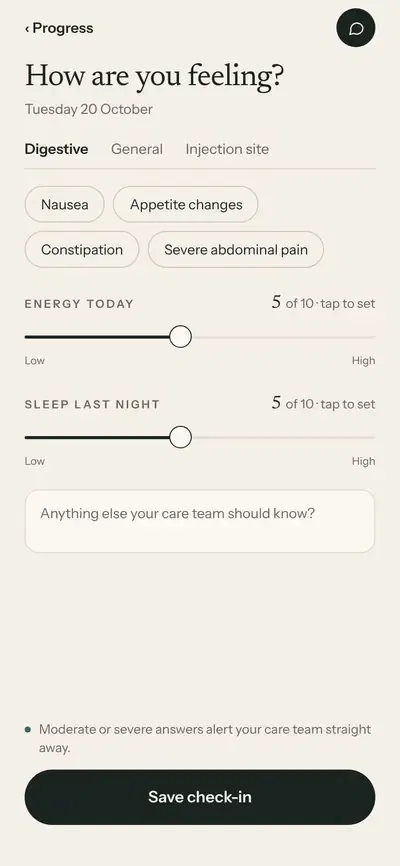
A patient who can see their own entries has a clearer record of what they have done and what they still need to log. A streak or a simple history of completed and skipped entries can make consistency easier to notice, and a break in the pattern easier to acknowledge.
Progress tools should be useful, not noisy. Give patients an easy way to log a dose, note how the week went, or record a concern. Let them see their own history without implying that a streak is a clinical assessment.
3. Notice a break in the pattern within days, not months
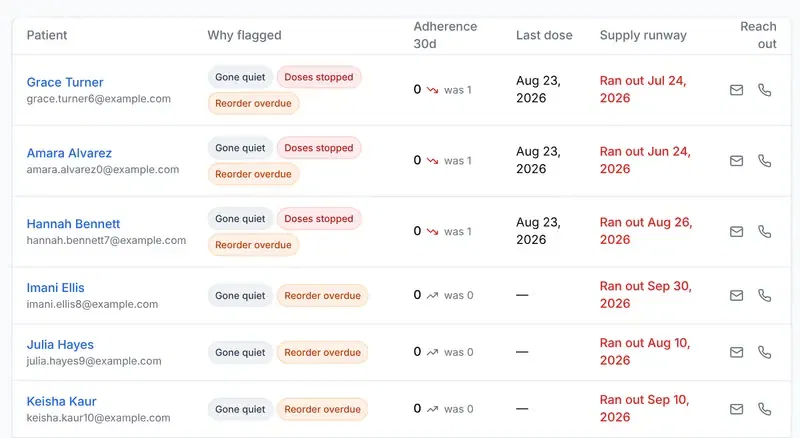
A clinic cannot respond to a change it cannot see. Decide what should prompt a review: for example, a missed expected entry, no recent dose log, or a supply countdown that suggests a patient may run out before ordering again.
The point is not to label a patient as “non-adherent.” It is to give staff a timely reason to check in. A short message can ask whether the patient needs help, wants to discuss something with the care team, or has already paused their program. The response, not an assumption based on a dashboard flag, should determine what happens next.
4. Put the reorder where the patient already goes
If patients use a portal to log doses and check in, making the reorder available there can remove steps. Show the patient when their supply is expected to run low, make the next action clear, and avoid asking them to re-enter information the clinic already holds.
The clinic still needs its own process for reviewing orders and handling questions. But the patient should not have to navigate a separate, unfamiliar route just to say they want to continue.
This approach is relevant across treatment types, from weight-loss clinics to telehealth practices. The cadence and workflow will differ; the operational goal is to make the right next step visible and straightforward.
What to measure: three useful operating signals
You do not need a complex score to start seeing where patients may need attention. Begin with three measures you can review consistently:
- Entries completed versus skipped over the last 12 weeks. Calculate the percentage as completed expected entries divided by total expected entries, multiplied by 100. Decide in advance how your clinic records approved pauses or schedule changes so the percentage is interpreted consistently.
- Days since the last dose logged. Compare this with the patient’s intended cadence and your clinic’s follow-up rules. A gap is a prompt to review, not proof of what happened.
- Days of supply left. Use the supply information your clinic has to identify when a reorder may be needed. Where the estimate is uncertain, confirm it with the patient rather than treating it as a fact.
An illustrative example with round numbers; swap in your own: if a patient had 12 expected weekly entries over the last 12 weeks, and 9 were completed while 3 were skipped, the logged-entry rate would be 75%. That number is useful as an operational signal, not a universal standard or a clinical judgment.
The uncomfortable part: an order history is not an adherence record
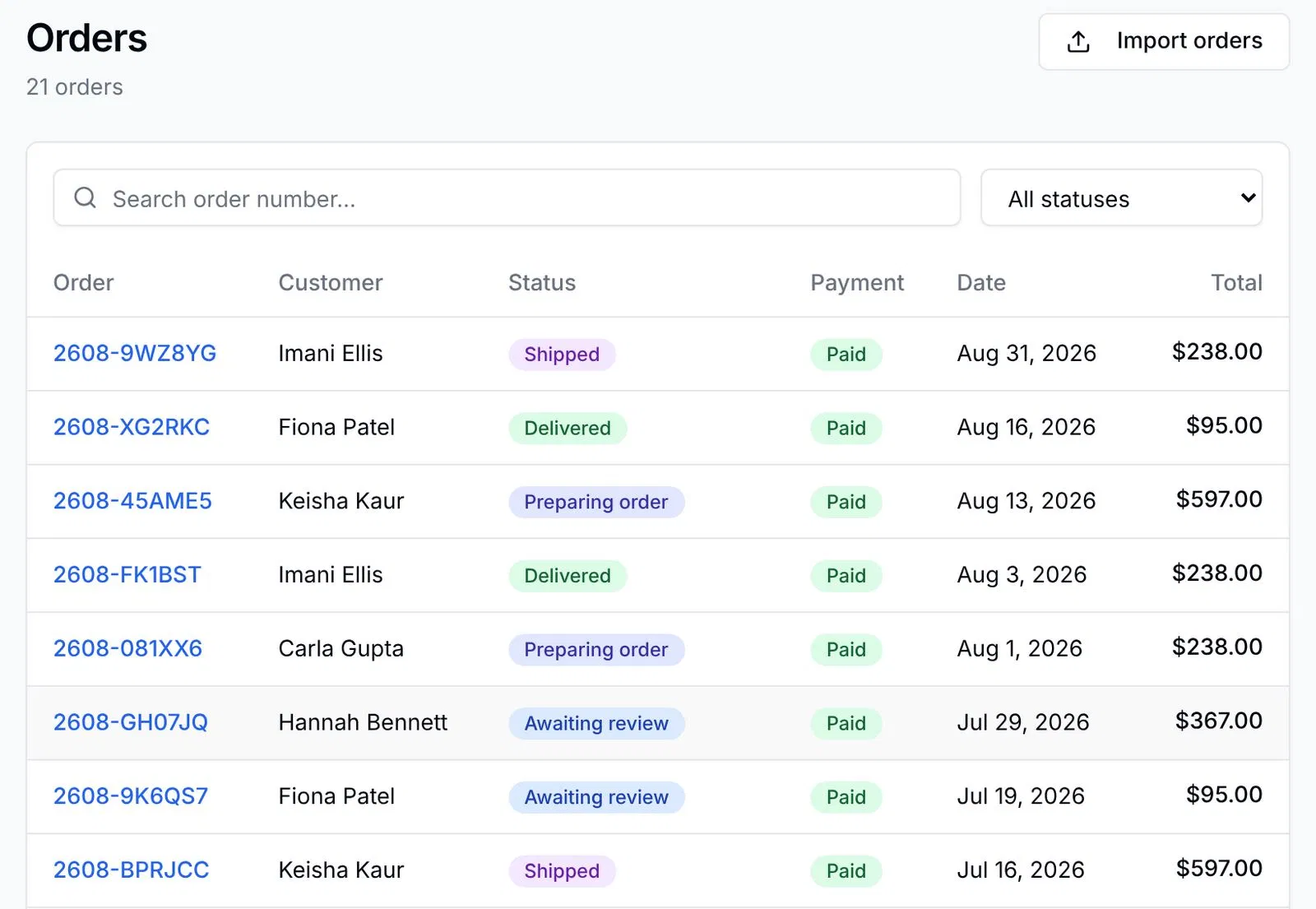
If a clinic’s only record is order history, it can see what was purchased and when. It cannot see a patient’s week-to-week routine, a newly missed entry, or a supply concern until that information surfaces some other way.
That makes early outreach harder. Staff may not know who to contact, what to ask, or whether a patient has already raised a concern. More reminders alone will not fix that visibility gap. Clinics need a way for patients to log what is happening and for staff to review changes in time to respond.
ClinicBond is one example of a white-label patient app and clinic dashboard built for recurring programs, with dose reminders, adherence streaks, weekly check-ins, supply countdowns, two-tap reordering, and at-risk patient flags. Its architecture is HIPAA-compliant, with a BAA on every plan; a 14-day free trial is available with no card required. These tools can support an operational workflow, but they do not replace clinical judgment or a conversation with the patient.
For more on a related point in the patient journey, see why med spa patients quit at week nine.
Frequently asked questions
How do you improve medication adherence in a telehealth clinic?
Improve medication adherence by making the patient’s schedule, logging routine, and next step easy to see and use. Pair reminders with a way to spot missed entries and a clear route to contact the care team, rather than relying on one-way messages alone.
What is a good adherence rate for a recurring treatment program?
There is no single adherence rate that is right for every recurring program. Define the expected entries for the treatment cadence, calculate completed entries against that schedule, and use the result to guide a review, not as a universal benchmark.
Can a patient app improve medication adherence?
A patient app can support medication adherence by bringing reminders, logs, progress, check-ins, and reorder steps into one place. Its value depends on whether it fits the patient’s routine and gives the clinic useful visibility; it cannot establish why a patient missed a dose or guarantee an outcome.
Nothing here is medical advice; the right operational response depends on your treatment mix, patient circumstances, and cadence.